EBERP FAQs
Learn more about EBERP below!
Frequently Asked Questions (FAQs)
1. What is EBERP?
- The Energy Burden and Emissions Reduction Program (EBERP) is a collaboration between Durham, Granville, and Orange Counties funded by a Department of Energy grant.
- The program is designed to help community members through home energy efficiency services and energy education.
2. How will I benefit from participating in EBERP?
- Home Health & Safety Benefits: Energy efficiency upgrades in homes can help address issues such as leaks, mold, pests, and temperature control. They can improve indoor ventilation and air quality, maintain healthy temperatures and humidity levels (to prevent mold), and reduce noise levels. These upgrades can lower the symptoms of heart and respiratory conditions, allergies, and other health issues. They also provide physical comfort, which supports mental health and well-being.
- Energy Bill Savings: EBERP expects for homes to reduce energy use between 8% and 20%. While energy use and dollars saved can vary by home based on the type of repairs done and on your energy use habits, our team has some reasonable estimations based on previous energy projects. See Question 9 in this document for more information on potential savings.
- Energy Education: EBERP will also provide education in the form of workshops and materials that instruct residents on how to adopt behaviors that will reduce home energy use. These workshops will teach residents home energy basics, as well as easy, low-cost actions you can take to save energy and money in your home. See Question 17 in this document to learn more about energy education through EBERP.
3. Do I qualify for services? What are the selection criteria?
The EBERP criteria for participation include:
- Must live in Durham County, Granville County, or Orange County, NC
- AND either
- earn no more than the 300% Federal Poverty Guideline (FPG) income threshold, for services AT NO COST, or
- apply to pay for EBERP services with Clean Energy Fund of the Carolinas or other lender, or
- pay out of pocket for EBERP services
- AND either
- own a single-family, duplex, or manufactured home, or
- rent a home AND get permission from property owner
- AND the property owner must either
- be up to date on the property taxes, or
- have a payment plan with the County offices.
4. What does the 300% Federal Poverty Guideline (FPG) income threshold mean? Can I still participate in EBERP if my family makes over 300% of the Federal Poverty Guidelines?
FPG is determined by the U.S. Dept. of Health and Human Services. The guidelines are used to determine financial eligibility for certain programs and help ensure that services get to residents in need. Below is a table that conveys the income threshold for 300% of Federal Poverty Guidelines.
If you reside in an EBERP county, and your family makes no more than the amounts listed based on the number of people living in the home, you can receive the services at no-cost.
If you reside in an EBERP county, and your household makes above the threshold, you can still participate in the program, either through your own funding source or an EBERP partner. Our EBERP partner, Clean Energy Fund of the Carolinas (CEFC), can provide fixed-rate accessible financing for qualifying participants, or you can secure financing elsewhere.
| Household Size | Annual Income ($) |
| 1 | 46,950 |
| 2 | 63,450 |
| 3 | 79,950 |
| 4 | 96,450 |
| 5 | 112,950 |
| 6 | 129,450 |
| 7 | 145,950 |
| 8 | 162,450 |
For more information, visit the Detailed Guidelines offered by U.S. Dept. of Health and Human Services
5.What kind of upgrades can I receive in the program?
Upgrades provided by EBERP will vary based on what each home needs and can include:
- Air & duct sealing
- Ventilation
- Attic insulation
- Crawlspace ceiling insulation
- Crawlspace enclosure
- Fire safety improvements, such as providing smoke detectors, fire extinguishers, carbon monoxidedetectors
- Water heater pipe insulation
- Sealing small cracks and gaps in the home
- Energy-efficient light bulbs (i.e. LED)
- Water-efficient plumbing fixtures, such as aerators and showerheads
- Duct replacement
- Mobile homes: insulated skirting
- Mobile homes: crossover duct repairs
EBERP may provide, on a limited basis:
- Energy efficient water heaters
- Water heater insulation/blankets in non-conditioned spaces
- Exterior doors for health & safety reasons
- Sealing hard to reach spaces for limited-mobility residents
- Electrical repairs
- Upgraded thermostats
- HVAC system replacements
EBERP will not address:
- Roof repairs
- Window replacement
- Major mold remediation
- Asbestos or lead paint remediation
- Foundation repairs
- Wall insulation
- Water-efficient toilets
- Other energy-efficient appliances, such as refrigerators and washing machines
- Stove replacement
- Pest issues (termites, bats, squirrels/mice)
- Other upgrades not related to energy efficiency, including but not limited to front/back door stairs, handrails, porches, storm doors
6. What if I want to have one of the repairs/upgrades that EBERP does not provide?
EBERP partner, Clean Energy Fund of the Carolinas, can provide fixed-rate accessible financing for services including energy efficiency services, hurricane preparedness, septic upgrades, roof repair and replacement, and aging-in-place improvements. You can learn more about these options at CEF Carolinas.
7. What are health and safety repairs? Which ones does the program provide?
Health and safety repairs are essential repairs that are necessary to ensure the livability and safety of a home, and they must be done before energy efficiency work can be carried out. Making these repairs can help prevent major issues like air leakage and structural damage.
While this program is designed to reduce energy use through improving efficiency, up to 20% of the funds used on each home can be used to address health and safety issues. EBERP will cover some but not all types of health and safety repairs. Repairs that may be covered include:
- Basic bathroom floor repairs due to water damage
- Electrical repairs for safety compliance
- Fire safety improvements, such as providing smoke detectors, fire extinguishers, carbon monoxide detectors
- Ventilation improvements
8. How will my home be assessed for services? Can I choose what EBERP does in my home? What is the process?
An EBERP-certified contractor will visit your home to conduct a full assessment focused on energy efficiency and health and safety needs. This includes tests such as blower door diagnostics to measure air leaks, tests for heating systems and appliances, and a general inspection of insulation, ventilation, and moisture issues.
Once they complete this assessment, the list of recommended repairs and upgrades will be shared with the EBERP administrative team. The EBERP team will send the results of the assessment and an agreement of the upgrades that EBERP can perform.
9. How much energy and money can I expect to save after I receive upgrades?
While energy use and dollars saved can vary by home, based on the type of repairs done and on your energy use habits, our team has some reasonable estimations based on previous energy projects.
For example, EBERP partner, Enpira Inc. carried out a recent study that determined that a utility program providing energy efficiency services was resulting in a 21% median electricity reduction in homes. Another study carried out by Enpira and EBERP partner NCSEA on government-funded weatherization services in NC determined that these helped result in a median of $157 in savings per year for the sample of homes.
Again, these are not guarantees, but examples of homes that have saved from energy services similar to those offered by EBERP. This project aims for homes to reduce energy use between 8% and 20%.
10. What will be required of me as an EBERP participant?
EBERP will only require the following:
- Information regarding the home and its residents. See the next question for full details.
- Time commitment to let in contractors, which will vary depending on what repairs and upgrades are being performed.
- If you live in a rental property, we will need permission from the homeowner. EBERP will provide an agreement for the homeowner to sign.
EBERP also strongly encourages participants to attend an in-person workshop. Workshops will be scheduled at set times in various public and community locations in each County. The frequency and timing will depend on the availability of EBERP admin and community space.
11. What type of personal information do I have to share with EBERP, and why?
The EBERP Team takes your privacy very seriously. We’re committed to only using your personal information for the purpose of helping you and other participants. We will never ask for information that isn’t directly related to your participation in the program and will never share your information with any organization beyond our project partners. EBERP follows data security best practices to ensure your information is safely stored.
What we may collect and why:
- Income information (e.g. pay stubs, tax returns): To verify income eligibility to receive program benefits at no cost.
- Utility data (e.g. monthly usage, bills): To measure energy and cost savings from upgrades.
- Home information (e.g. size, age, prior repairs/upgrades): To determine which improvements are best for your home.
- Participant information (e.g. name, contact details, owner/renter status): So we can contact you for important program updates and coordinate scheduling for services related to your participation.
- Program feedback (e.g. survey responses): To evaluate the impact of the program.
Any data shared for grant reporting or public use will be deidentified and grouped, so individuals cannot be identified.
12. I rent my home. Can I still participate in EBERP?
Yes! Renters are eligible for program services. Property owner permission is required before any work can be done in the home. Furthermore, renters can take part in the community energy workshops that will instruct residents on how they can reduce energy use.
13. I live in a mobile/manufactured home. Can I still participate in EBERP?
Yes! Mobile/manufactured homes are eligible for EBERP services.
14. What is the EBERP timeline? When will I find out if I qualified for the program? How long will it take the contractor to assess my house for necessary improvements or repairs? How long will the EBERP process take before work in my home is completed?
EBERP will be rolled out in multiple phases, focusing on different neighborhoods throughout the program. Each phase will follow a similar timeline and include:
- Community outreach and promotion in priority neighborhoods
- Info sessions and application period for interested households
- Home assessments and recommendations by EBERP contractors
- Service agreement with eligible participants
- Home improvement and repair work by the contractors
- Quality assurance check, ensuring work is completed to standard
- Household completion and participant feedback
Key timing details:
- From the initial neighborhood promotion to completed work in homes, each phase is expected to take about 12 months. The EBERP Team will be available to participants and in communication throughout the entire phase.
- Home assessments typically take about 1 hour, though more complex homes may take longer.
- Once a service agreement is signed, it may take between 1 to 6 weeks before work can begin.
- From initial inspection to the actual work completed in homes will usually be within 30-60 days, depending on the type and scope of services, weather, and scheduling.
The full EBERP timeline began in October 2024 and is expected to end in early summer 2027.
15. Can I use my own contractor, or do I have to use the program’s? What qualifications and experience do these contractors have?
To receive EBERP services at no cost to you, you must use one of our pre-approved contractors. These contractors have been carefully selected based on their qualifications, experience, and proven success with similar home improvement programs. They are specifically trained through our partner, the Piedmont Triad Regional Council, and meet national standards set by the Interstate Renewable Energy Council (IREC).
16. Who will be coming into my house? When? Do I need to be here? What if I can’t be?
Three sets of trusted contractors will come into the home at different times.
- First visit: A contractor team will perform a home assessment.
- Second visit: Another contractor team will come to provide the upgrades, and the number of times they need to be in the home will depend on what upgrades are selected for the home. You will be given an estimate of how many visits the upgrade contractor will need to make and contact information for the upgrade contractor when you receive the assessment report with the recommended upgrades.
- Final visit: The final contractor team will visit for a Quality Assurance check to ensure work has been completed to EBERP standards.
You, or another trusted person over the age of 18, will need to be in your home during each contractor visit. Work can be scheduled during weekdays, evenings, and weekends, and EBERP contractors will work with you to make sure the timing in your home works for your schedule and needs.
17. What is a DIY workshop? What will these educational programs entail?
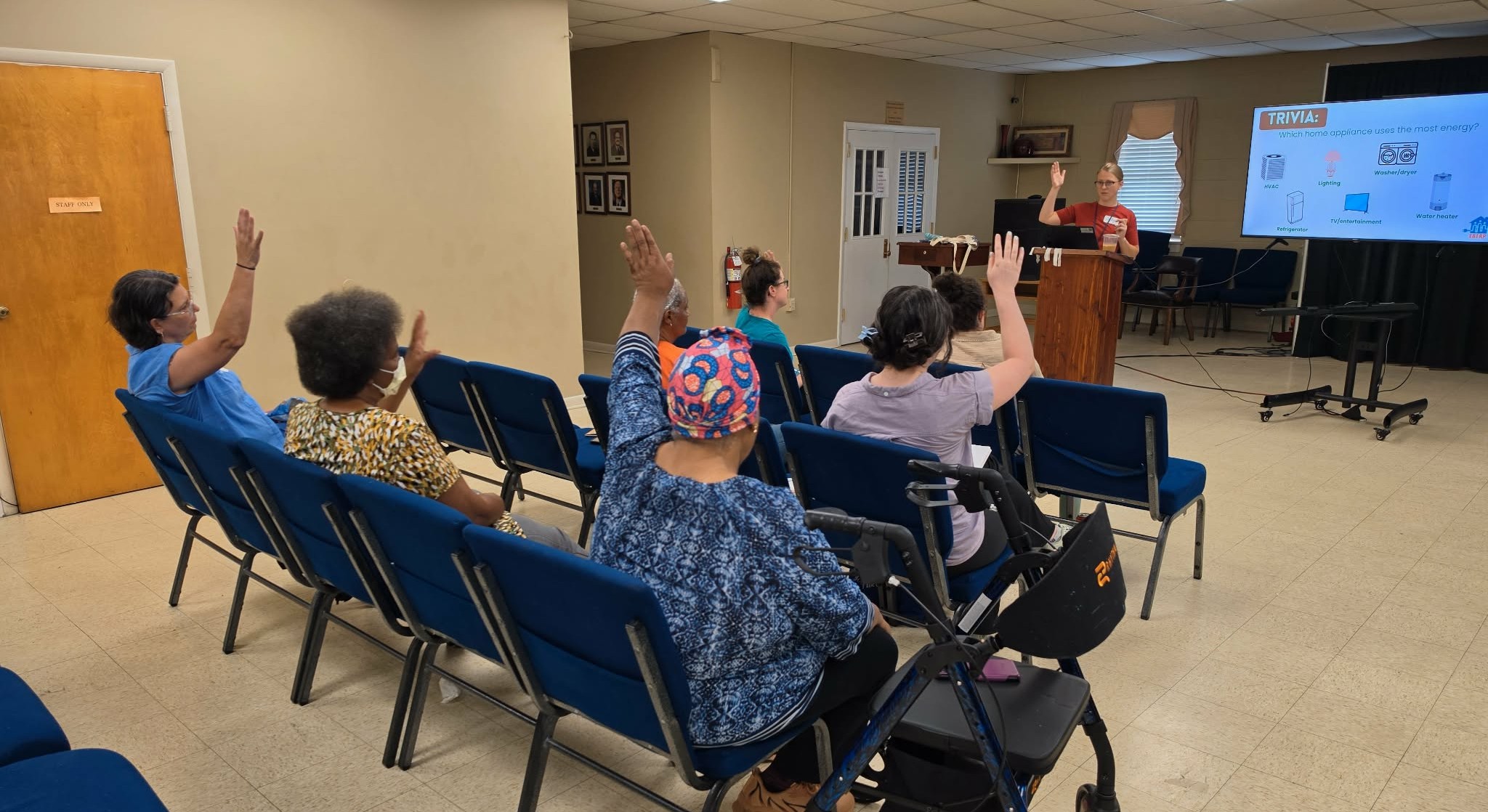
EBERP’s Do-It-Yourself (DIY) workshops are hands-on learning events designed to teach participants the basics of home energy efficiency. These workshops will cover simple, low-cost actions participants can take to reduce energy use and save money by lowering their household utility bills. Each workshop will include live demonstrations and give participants the confidence to try these improvements on their own, as well as be encouraged to help their neighbors in need.
Participants will learn:
- Home energy and energy efficiency basics
- Practical tips to save energy and money
- How to complete common DIY tasks, such as:
- Sealing air leaks around windows and doors
- Installing weatherstripping
- Insulating hot water pipes
- Installing water-efficient sink and shower fixtures
Workshops will be scheduled at set times in various public and community locations in each County. The frequency and timing will depend on the availability of EBERP admin and community space. All community members are welcome to participate -even those who don’t plan to or ultimately don’t sign a service agreement for home improvement. Additional resources will be provided to refer participants to other home improvement programs and encourage them to share helpful tips with their neighbors, family, and community.
You can find and register for upcoming sessions on the Durham County Sustainability Office Eventbrite page and find DIY and home energy education resources at bit.ly/EBERP_DIY.
If you are interested in having EBERP host a workshop with your community group or in your neighborhood, please reach out to EBERP@DCoNC.gov.
18. Who are Neighborhood Ambassadors and what do they do? How can I become a Neighborhood Ambassador?
Neighborhood Ambassadors are residents recruited from priority neighborhoods who will serve as local leaders, after undergoing an EBERP training. Ambassadors will inform other community members about the program, assist households in EBERP applications, support participants as they receive energy services, and help teach others how to save energy in their homes. Furthermore, they will engage with fellow neighbors through door-to-door outreach, community events, social media and other word-of-mouth strategies.
Neighborhood Ambassadors will receive a stipend for their time spent promoting and supporting EBERP.
To learn more about the role of an ambassador, and to indicate your interest in becoming one, you can submit this form: bit.ly/EBERP_interest
19. Will there be a translator if I am not comfortable in English?
Spanish translation services will be available for EBERP info sessions, application support, and DIY workshops as needed. If you are interested in EBERP but speak another language, please contact EBERP@dconc.gov to make this request. Program administrators will try to secure translation for your language for these events.
We cannot guarantee that a translator will be able to be in your home when contractors visit, but you can request this and program administrators will make every effort to accommodate your request.
20. Where is this money coming from to fund EBERP?
EBERP funding is provided through the US Department of Energy’s Energy Efficiency and Conservation Block Grant (EECBG) Program as part of the Bipartisan Infrastructure Law enacted by Congress in 2021. The three-county team was 1 of only 12 entities selected as part of a competitive grant process for the EECBG funds.
21. Who is managing EBERP?
EBERP is a collaboration between Durham County, Orange County, Granville County, NC Sustainable Energy Association (NCSEA), Clean Energy Fund of the Carolinas (CEFC), Central Pines Regional Council (CPRC), Enpira, Inc., and Piedmont Triad Regional Council (PTRC). Additionally, EBERP is informally working with local neighborhood and community based organizations in each county.
22. Who can I contact if I have a question not on this list?
You can contact our team via email at EBERP@dconc.gov, or 919-608-5982.