

Natural Resource Management
Stewardship and Monitoring
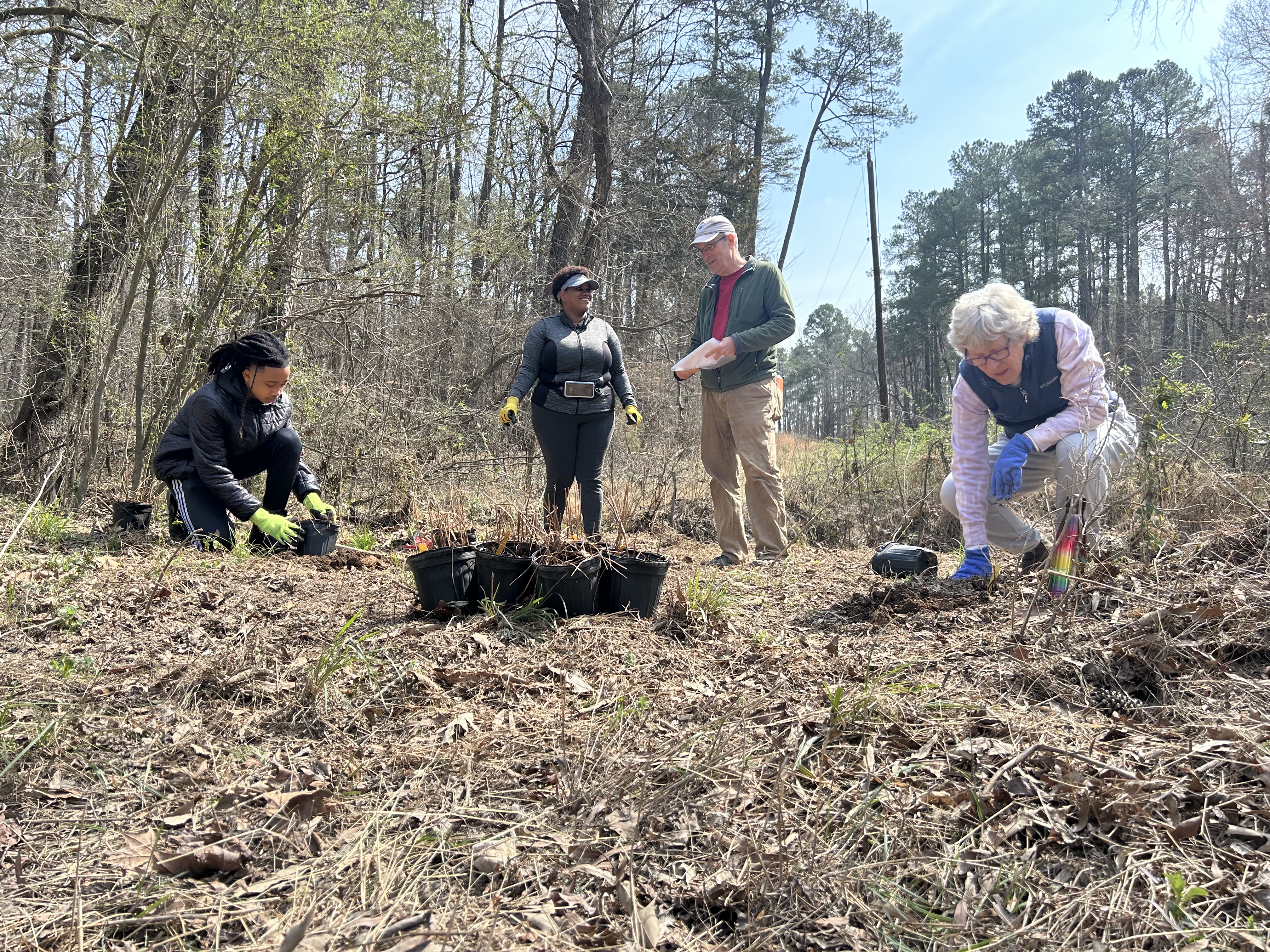
Permanently protecting a tract of land through fee simple acquisition can take years, but establishing this permanent protection is only the first step in what then becomes a perpetual commitment to stewarding the land. One of the fundamental ways that Durham County Open Space staff do this is through regular, standardizing monitoring and documentation of conditions County-owned conservation land. The purpose of this is to ensure that the land's conservation values - things like biodiversity, water quality, and wildlife habitat - are not being actively harmed by activities on or near the property. Staff also note observed changes to the ecosystem, notable species, threats like invasive plants, and other information that help tell what is happening on the land. At some County preserves, volunteers assist staff with this work.
Invasive Species Management
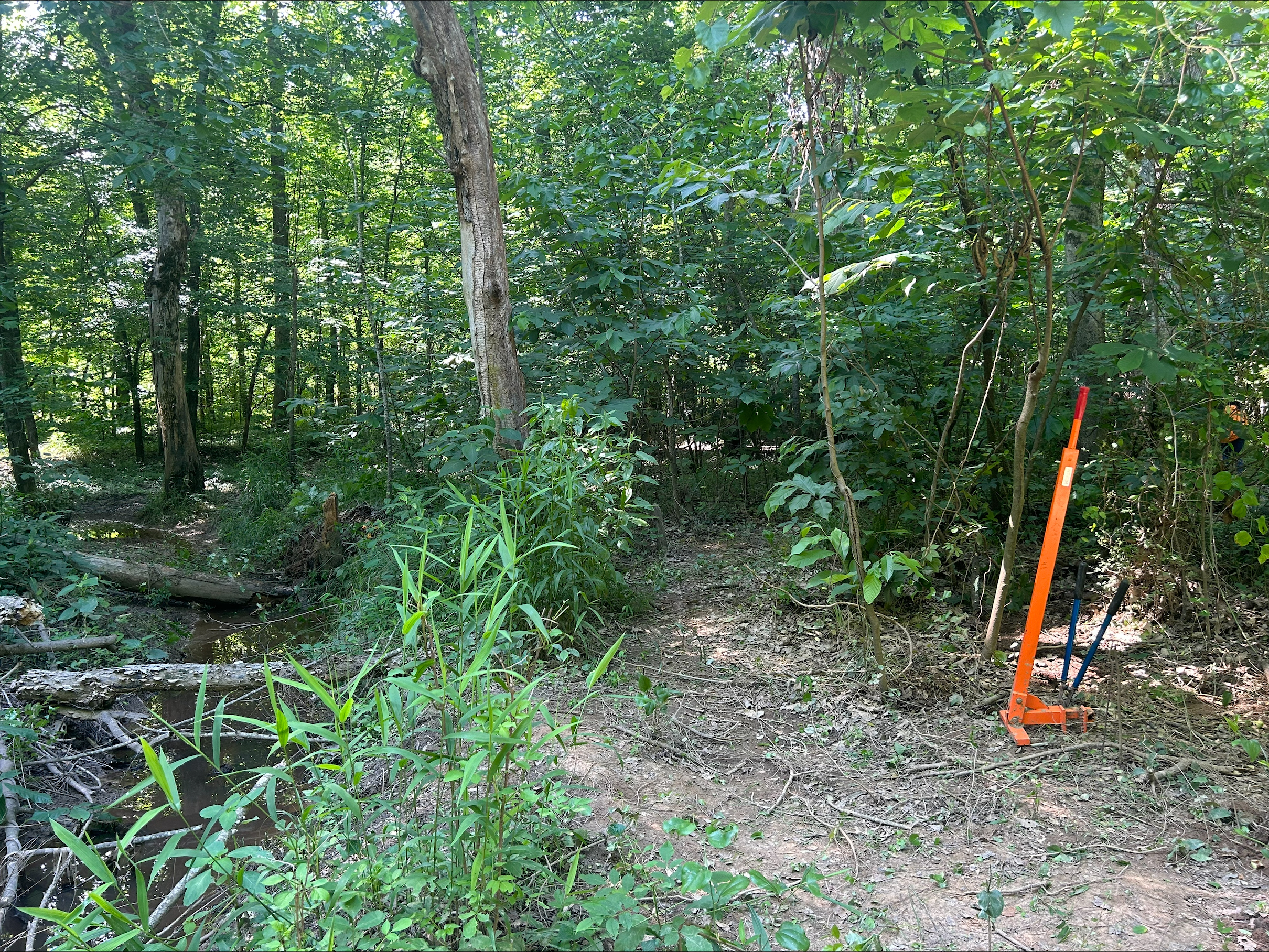
Invasive species are non-native species that cause harm to local ecosystems by driving out native species. Globally, invasive species are one of the main drivers of biodiversity loss; locally, they threaten the ecological health of many of our County's most important natural areas. The Open Space Program uses information collected by scientists, staff, and volunteers to identify priority areas for removing invasive plants, focusing on places and species known to be especially vulnerable due to ecological sensitivity or the degree of infestation. At the New Hope Creek Bottomlands, for example, staff and volunteers have concentrated on removing the highest priority invasive species, like privet, in rich alluvial habitats and around critically-imperiled shellbark hickory trees. Staff also work with the North Carolina Invasive Plant Council on efforts to eradicate Fig Buttercup (Ficaria verna).
Habitat Restoration
In addition to removing invasive species from sensitive ecosystems, the Open Space Program occasionally supports projects to restore native plant communities in vulnerable and/or degraded habitats. This work must be done very carefully; otherwise, the intervention can end up doing more harm than good. As such, this work is done in coordination with, and under the recommendations of, expert biologists who are familiar with Durham County Open Space parks and preserves. Over the past few years, the Open Space Program has worked with consultants and volunteers on native plant projects at the New Hope Creek Bottomlands and Hollow Rock Nature Preserve.
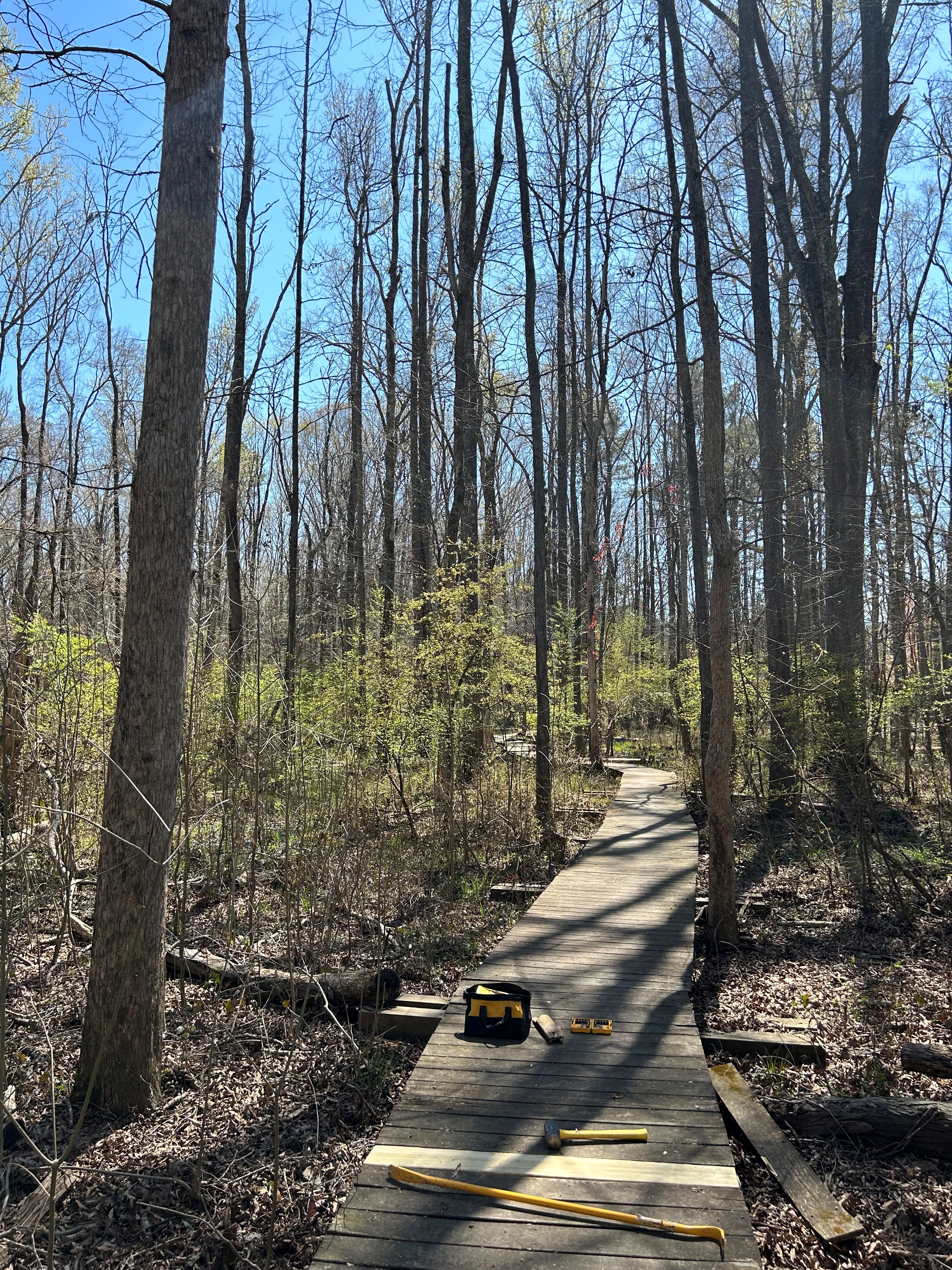
trails, amenities, and public access
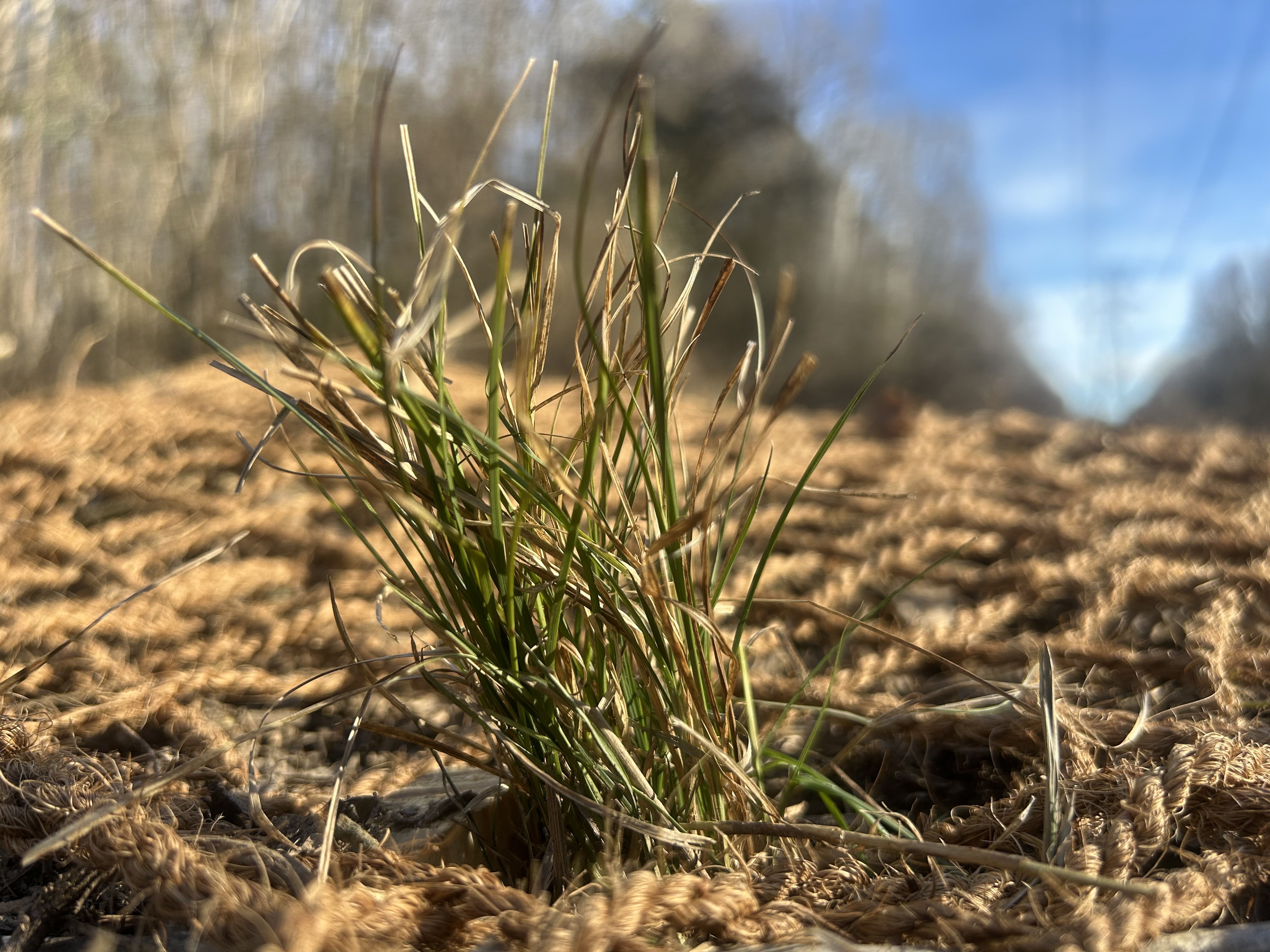
The Open Space Program manages or co-manages four public parks and preserves. Caring for public open spaces requires upkeep of amenities like trails, bridges, and structures, as well as longer-term planning to ensure safe access while protecting a site's natural and cultural resources. As with other types of land management, maintaining amenities for low-impact, nature-based recreation requires a combination of challenging (but often very fun!) manual labor and a thorough understanding of a site's resources. Staff rely on professional expertise and guidelines put forth by land management agencies to design and maintain amenities that minimize impacts to sensitive areas and are resilient in the face of changing environmental conditions. To help protect Durham County's parks and preserves, we ask that visitors practice Leave No Trace principles and adhere to the rules and guidelines listed on the Parks and Preserves page.