
"We The People" Poetry Slam
General information
Durham County & Durham Public Schools — October 2026
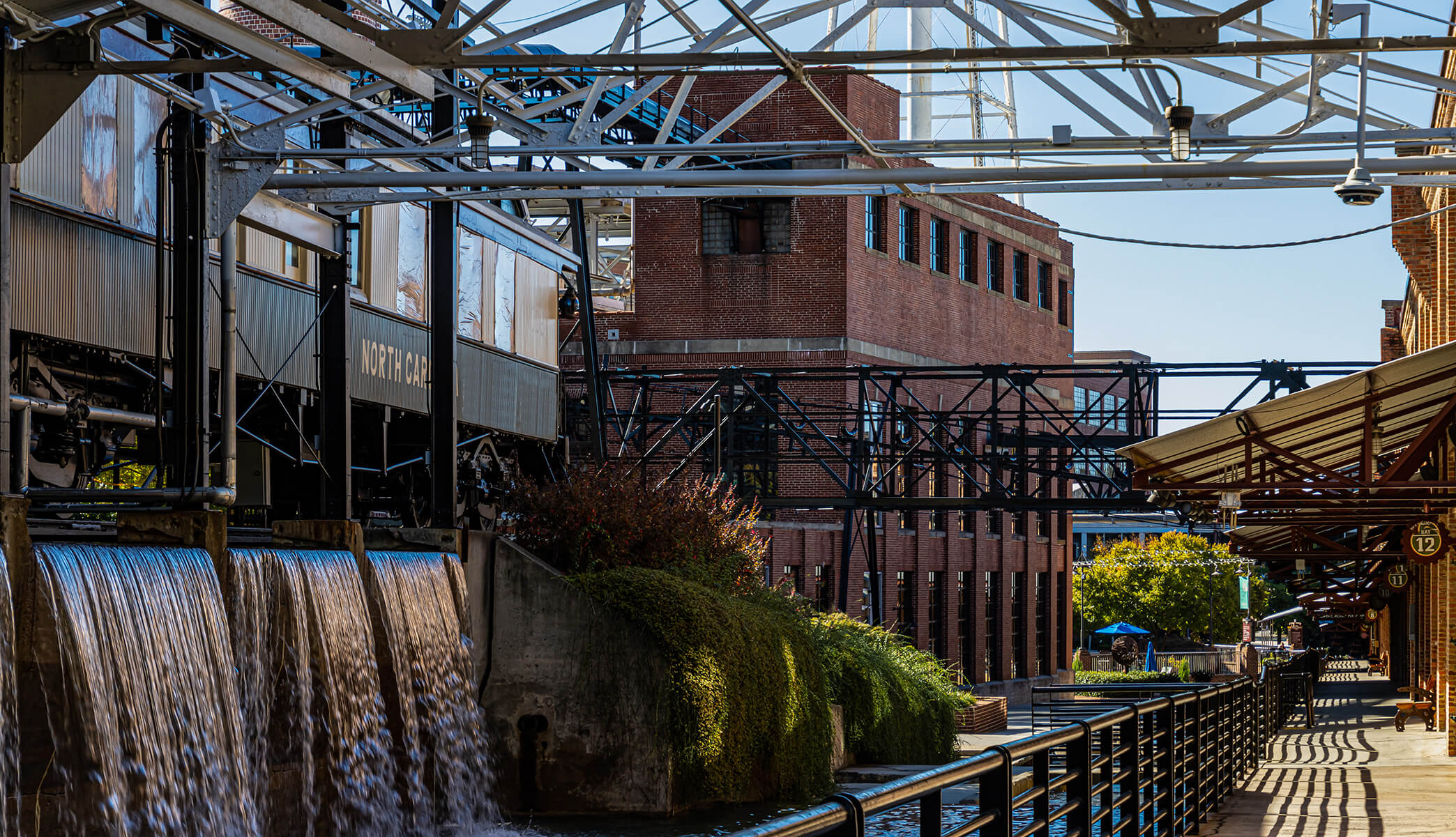
October 12th at The Carolina Theatre - Cinema One @ 6pm-8pm Doors at 5:30pm
The “We the People” Poetry Slam is a unique opportunity for students of different cultures, heritages, and experiences across Durham to come together and creatively share what it means to be “The People” in America. We encourage any K-12 students to participate and bring their best poems reflecting who they are and their lives in America.
What is a Poetry Slam?
A poetry slam is when a group of poets get together to perform their work for each other and an audience. This will be a competition with scores given for each performance. Each performance will be judged by a panel of judges. The poem, delivery, and overall performance will be considered when scoring.
Prizes will be awarded to the poets who come in 1st and 2nd place.
Poems and Performance
- Poems can be on any subject in the overall theme of American Life.
- Original poems only.
- All AI usage is strictly prohibited.
- No profanity or explicit sexual content/language
- No props.
- Performances are timed. (Three minutes MAXIMUM plus a 30-second grace period).
- Participants must submit a written copy of the poem they plan to perform at least 7 days in advance (Submit to: communityengagement@dconc.gov)
Sensitivity Rule
Any participants who make disparaging remarks about any ethnic group, particular religion, culture, sexual orientation or gender differences will be immediately disqualified.
Judging Criteria
- Written Content (10pts) – How well written is the piece? Is poem free of inappropriate content? Is it easy to follow?
- Technical Performance (10pts) – Are the words clear and easy to understand? Is pronunciation acceptable? Are rate, pitch, and volume appropriate? Is vocal variety adequate? Was the piece memorized?
- Physical Presence (10pts) – Does the poet set an adequate mood relating to the piece? Is there a connection with the audience? Was there proper use of movement or body language? Does the performance grab attention and convey emotion?
- Creativity (10pts) – Does the poet use poetic elements? Were gestures and body movement utilized? Was the piece creative?
- Overall Experience (10pts) – How did the entire experience come together?
Prompts and Reading Examples for Student Poets (Elementary–High School)
Below are prompts and potential readings divided by grade to encourage creative thinking.
PART ONE: PROMPTS BY GRADE BAND
Elementary (K–5)
1. "Dear America" — Write a letter or poem to America, like you're writing to a friend. What do you love about it? What do you wish it would do better?
2. "Hello, Future Me" — Write a poem to yourself, all grown up. What do you hope your town, your school, or your country looks like when you're older?
3. "Who's in My 'We'?" — Think about your class, your neighborhood, your family. Who do you want to make sure feels welcome? Write about it.
Middle School (6–8)
1. "Chasing the Dream" — What is the "American Dream" to you? Something your family is chasing? Something you've already found? Something that needs a new definition?
2. "Worth Standing Up For" — Pick one right — free speech, privacy, education, whatever matters most to you — and write about a moment when you saw it matter, or saw it missing.
3. "My Seat at the Table" — When do you feel like your voice actually counts? Write about what a fair, working democracy looks like from where you stand.
High School (9–12)
1. "If I Wrote It" — If you could rewrite the Constitution today, what would you protect, add, or take out? What values would you refuse to compromise on?
2. "America at 500" — Fast-forward 250 years. What does the best version of this country look like, and what has to change to get there?
Prompts and Reading Examples for Student Poets (Elementary–High School)
Below are prompts and potential readings divided by grade to encourage creative thinking.
PART TWO: READING EXAMPLES FOR INSPIRATION
SUGGESTED EXCERPTS BY GRADE BAND
Short lines to introduce each reading in class — not full text. Full poems are linked below.
Elementary — imagery kids can picture, hope without heaviness
- Richard Blanco, "One Today": "One sun rose on us today, kindled over our shores."
- Maya Angelou, "On the Pulse of Morning": "Lift up your eyes upon this day breaking for you."
Middle School — identity and belonging, voices they likely already know
- Amanda Gorman, "The Hill We Climb": "For there is always light, if only we're brave enough to see it."
- Joy Harjo, "An American Sunrise": "None of us is above the other in this story of forever."
High School — ready for the harder, historically-grounded rhetoric
- Frederick Douglass, "What to the Slave Is the Fourth of July?": "What, to the American slave, is your 4th of July?"
- Thurgood Marshall, "Reflections on the Bicentennial of the United States Constitution": "The true miracle was not the birth of the Constitution, but its life."
Six examples spanning historic and contemporary American voices on liberty, independence, democracy, justice, and identity. Citations link to reputable sources (national archives, poetry organizations, or educational institutions) rather than full reproduced text, since most of the contemporary works are still under copyright — see the note at the end on classroom use.
1. Frederick Douglass, "What to the Slave Is the Fourth of July?"
- Delivered July 5, 1852, Rochester, NY, to the Rochester Ladies' Anti-Slavery Society.
- Theme: the gap between America's founding ideals of liberty and independence and the lived reality of slavery — one of the most powerful examples of civic dissent in American oratory.
- Source: National Constitution Center — https://constitutioncenter.org/the-constitution/historic-document-library/detail/frederick-douglass-what-to-the-slave-is-the-fourth-of-july-1852
2. Thurgood Marshall, "Reflections on the Bicentennial of the United States Constitution"
- Delivered May 6, 1987, at the Annual Seminar of the San Francisco Patent and Trademark Law Association, Maui, HI.
- Theme: the Constitution as a living, still-unfinished document; individual rights and justice as ongoing work, not a settled inheritance.
- Source: National Constitution Center — https://constitutioncenter.org/the-constitution/historic-document-library/detail/the-constitutions-bicentennial-commemorating-the-wrong-document-1987
- Full text: Thurgood Marshall Foundation — https://thurgoodmarshall.org/speeches/thurgood-marshall-speech-may-6-1987/
3. Maya Angelou, "On the Pulse of Morning"
- Recited January 20, 1993, at Bill Clinton's presidential inauguration. Angelou was the first Black poet and second poet overall to read at an inauguration (after Robert Frost in 1961).
- Theme: unity across difference, shared national identity, and facing history honestly in order to move forward.
- Source: Poetry Foundation — https://www.poetryfoundation.org/poems/48990/on-the-pulse-of-morning
- Teaching resource with discussion questions: Bill of Rights Institute — https://billofrightsinstitute.org/activities/maya-angelou-on-the-pulse-of-morning-january-20-1993/
4. Richard Blanco, "One Today"
- Recited January 21, 2013, at Barack Obama's second inauguration. Blanco was the first Latino and first openly gay inaugural poet.
- Theme: ordinary American life — school buses, grocery stores, classrooms — as a shared, unifying story across a huge and different country.
- Source: Poetry Foundation — https://www.poetryfoundation.org/poems/154385/one-today
- Also: Academy of American Poets — https://poets.org/poem/one-today
5. Amanda Gorman, "The Hill We Climb"
- Recited January 20, 2021, at Joe Biden's inauguration, written partly in the days following the January 6th Capitol attack. At 22, Gorman became the youngest inaugural poet in U.S. history.
- Theme: hope and repair after division; being American as something you actively step into and build, not just inherit.
- Source: PBS NewsHour classroom lesson plan (grades 6–12) — https://www.pbs.org/newshour/classroom/lesson-plans/2021/01/lesson-plan-discuss-22-year-old-amanda-gormans-inaugural-poem-the-miracle-morning
- Also: Library of Congress blog — https://blogs.loc.gov/catbird/2021/01/for-there-is-always-light-amanda-gormans-inaugural-poem-the-hill-we-climb-delivers-message-of-unity/
6. Joy Harjo, "An American Sunrise"
- Title poem of Harjo's 2019 collection. Harjo, a member of the Muscogee (Creek) Nation, served as U.S. Poet Laureate from 2019–2022 — the first Native American to hold the position.
- Theme: identity and belonging from a Native American perspective; reclaiming a place in the American story after displacement.
- Source: Academy of American Poets — https://poets.org/poem/american-sunrise
- Also: Poetry Foundation — https://www.poetryfoundation.org/poetrymagazine/poems/92063/an-american-sunrise
A NOTE ON CLASSROOM USE AND COPYRIGHT
The Douglass and Marshall texts are in the public domain and can be freely reproduced or excerpted for teaching materials. The Angelou, Blanco, Gorman, and Harjo poems are still under copyright — fine to read aloud, discuss, and link to in a classroom or program setting under standard educational fair use, but any further reproduction would be subject to copyright.